
Turning the Tides with a Twist of the Knot — Master Po Ming-wah


The flower knot buttons on a cheongsam are small yet vibrant and eye-catching, boasting an endless variety of shapes. Crafted entirely by hand, a single narrow strip of cloth is gradually and magically transformed into flowers, Chinese characters, and auspicious motifs. Beyond serving as the ultimate finishing touch that breathes life into a cheongsam, each flower button is, above all, a profound blessing bestowed upon the wearer.
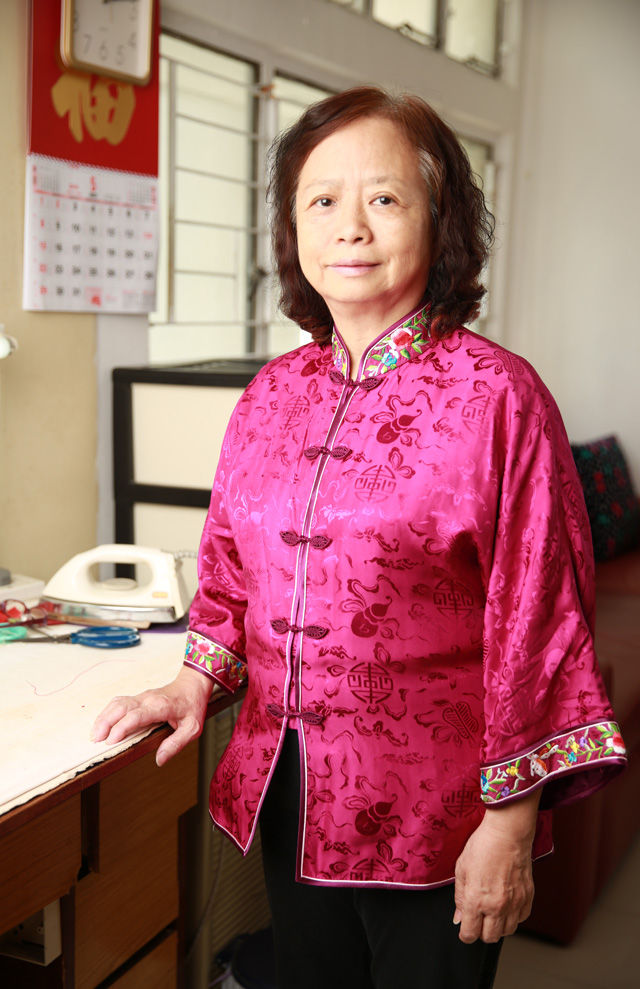
Po Ming-wah, the last remaining Shanghainese (Haipai) flower button master in Hong Kong, embarked on this craft at the age of thirteen, accumulating half a century of experience. Master Po's journey into flower buttons began with a challenging apprenticeship. Hailing from a tailoring family, she initially felt unfamiliar and indifferent to flower buttons, relying entirely on her father's meticulous guidance, starting with basic needlework. Fortunately, she encountered a mentor who treated her like her own child, patiently teaching her skills and cultivating her passion for the craft through gentle guidance.
During her apprenticeship, Master Po was diligent and eager to learn, seizing every opportunity for observation and study. She diligently researched the fundamentals, from the width of the strips and applying copper wire to ironing. After two years of apprenticeship, she began to open a studio with her father in Jordan, with the father-daughter duo making cheongsams and flower buttons respectively, working in perfect harmony.
After her marriage in 1978, Master Po briefly left the workforce to support her husband and raise her children. In 1983, she took over the flower button business due to her master's emigration to the United States. This transition allowed her to find an ideal work model—working from home, she could care for her children while maintaining an income, and during peak seasons, she could earn over ten thousand dollars a month.
Discussing the characteristics of Shanghainese flower buttons, Master Po explained that it originated from the skills passed down by Shanghai masters. Compared to the less-mentioned Cantonese (Guangpai) style, the Shanghainese style is known for its exquisite and delicate craftsmanship. Flower button making is a meticulous craft, with every step from material selection to the finished product being crucial. Master Po explained that a pair of large flower buttons takes about three hours, while delicate flowers take one hour, and the process includes fabric selection, starching (kai-jiang), ironing, strip cutting, and copper wire application, among other steps.
In terms of craftsmanship, the most demanding part of flower button making is the creation of the button head (niu-tou), which is hailed as the soul of the flower button. This skill emphasizes proportion and standards, with every detail requiring strict control. Master Po recalled that when she was learning from her master, she relied on "looking, remembering, and learning," memorizing various sizes and scales.
Master Po's career has experienced the rise and fall of Hong Kong's cheongsam industry. Before 1997, it was the golden age of the industry, where even part-time workers could earn seven to eight thousand dollars a month. Unfortunately, after the financial crisis, coupled with the retirement or passing of older masters, this craft gradually declined. Although cheongsam culture is diminishing, Master Po still insists on producing each piece to the highest standards, writing a moving chapter for this traditional craft. As the last remaining inheritor of Shanghainese flower buttons in Hong Kong, Master Po's dedication to the craft is admirable.
In recent years, Master Po has been committed to passing down this traditional craft. Since 2006, she has been teaching students, educating many who are interested in flower button making. During her 16-year teaching career, although her students are primarily female, she has also had four or five male students. Currently, her second daughter is following her in learning, hoping to pass down this skill.
Master Po is not only a craftswoman but also a cultural inheritor. In 2013, her works were collected by the Hong Kong Museum of History, and she also conducted cultural exchanges in Taiwan, showcasing this exquisite traditional Chinese craft.


Comments